
 SERVICES
 COURSES
 CONTACT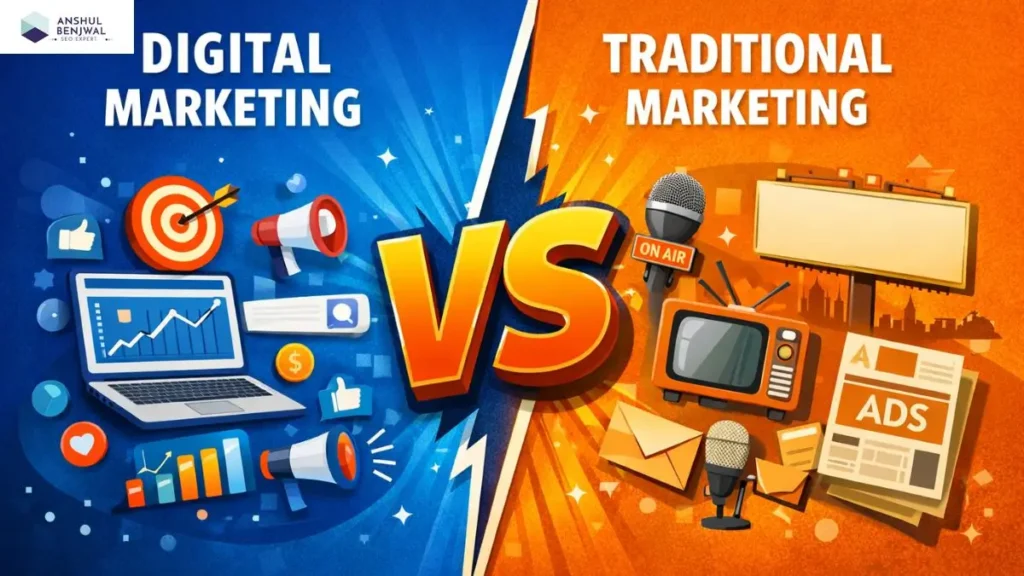
Digital marketing has reshaped how brands connect with customers, offering precision, measurability, and scalability that traditional marketing simply cannot match. From targeted advertising and real‑time analytics to cost‑effective campaigns that drive measurable ROI, the advantages of digital marketing over traditional marketing are clear for businesses aiming to grow online.
As a digital marketer who’s run campaigns for startups and established brands across the NCR, I’ve seen how online marketing—search engine optimization, social media advertising, email marketing, and content strategy—delivers faster insights and better customer engagement than print, TV, or outdoor media.
This post explores those advantages in depth, comparing digital vs traditional approaches with examples, data‑driven insights, and practical guidance to help you choose the right mix for your goals.
Why Digital Marketing Wins: A Concise Overview
Digital marketing gives businesses real‑time insights, granular audience targeting, and scalable spend, whereas traditional channels (print, TV, billboards) deliver broad reach but limited feedback and higher costs. Digital channels let you test messages, optimize campaigns instantly, and attribute conversions to specific actions — capabilities that materially improve return on ad spend (ROAS).
Key Advantages Explained with Examples and Practitioner Insight
- Cost and ROI: Running a targeted social or search campaign can cost a fraction of a TV spot while delivering measurable conversions. For example, a local Gurugram café can use geo‑targeted search ads to attract nearby customers for a few thousand rupees, whereas a print ad in a city newspaper may cost far more with no click‑through data. Lower entry costs and pay‑per‑click models make digital marketing accessible to small businesses.
- Measurability and analytics: Digital platforms provide dashboards that show impressions, clicks, conversions, and revenue in real time. This lets marketers iterate quickly: pause underperforming ads, reallocate budget, and A/B test creatives — actions impossible with static billboards. The ability to measure ROI precisely is a decisive advantage.
- Targeting and personalization: Digital channels enable segmentation by location, behavior, interests, and purchase intent. A Faridabad e‑commerce store can retarget cart abandoners with personalized offers via email or social ads, increasing conversion probability. Traditional media cannot match this level of personalization.
- Speed and flexibility: Campaigns can launch, pause, or pivot within hours online. Seasonal promotions, product launches, or crisis responses benefit from this agility. Traditional campaigns require long lead times and are costly to change.
- Engagement and two‑way communication: Social media and content marketing create dialogues with customers, building trust and brand loyalty. User comments, reviews, and shares amplify reach organically — a dynamic absent in one‑way traditional ads.
Digital vs Traditional
| Criteria | Digital Marketing | Traditional Marketing |
|---|---|---|
| Reach | Global; local targeting possible | Local to national; broad audience |
| Cost | Scalable; low entry cost | High fixed costs |
| Measurability | Real‑time analytics | Hard to measure precisely |
| Targeting | Granular audience segmentation | Mass targeting only |
| Flexibility | Instant changes and A/B testing | Long lead times; static |
Personal Note
As someone who has run campaigns for startups in Gurugram and retail brands in Faridabad, I’ve seen budgets of ₹10,000 produce measurable leads when targeted correctly online. The discipline that separates good digital marketing from wasteful spend is data literacy — knowing which metrics matter and acting on them daily.
Frequently Asked Questions (FAQs)
Que 1: Is Traditional Marketing Dead?
Ans: No — it still builds mass awareness for certain audiences, but digital offers better ROI and targeting for most business goals.
Que 2: Can Small Businesses Succeed with Digital Marketing?
Ans: Yes, low budgets, local SEO, and targeted ads make digital highly effective for SMEs.
Que 3: How Should a Business Split Budget Between Digital and Traditional?
Ans: Start with digital for measurable growth; allocate a portion to traditional media only if it effectively reaches your target demographic.
If you want, I can audit your current marketing mix (website, social, ads) and recommend a prioritized digital plan tailored to different city audiences, with estimated budgets and expected KPIs.
